The Ultimate Homemade Cream of Mushroom Soup Recipe
When the weather cools down and rainy afternoons call for ultimate comfort food, nothing warms the soul quite like a steaming bowl of homemade cream of mushroom soup. For decades, many of us relied on the convenience of commercially canned mushroom soups to build quick weeknight casseroles or basic sauces. However, once you experience the luxurious depth of flavor, velvet texture, and intense earthy aroma of a scratch-made version, there is simply no turning back. Making your own cream of mushroom soup allows you to control the quality of the ingredients, eliminate artificial thickeners or excess sodium, and truly celebrate the rich, complex flavors of fresh fungi. This recipe transforms humble kitchen staples like fresh mushrooms, aromatic herbs, and rich dairy into an elegant, restaurant-quality masterpiece. In this definitive guide, we will walk through the culinary principles required to build a deeply savory broth, master the perfect velvety texture, and customize your soup to create an unforgettable dining experience.
Understanding the Flavor Profile: Why Fresh Outperforms Canned
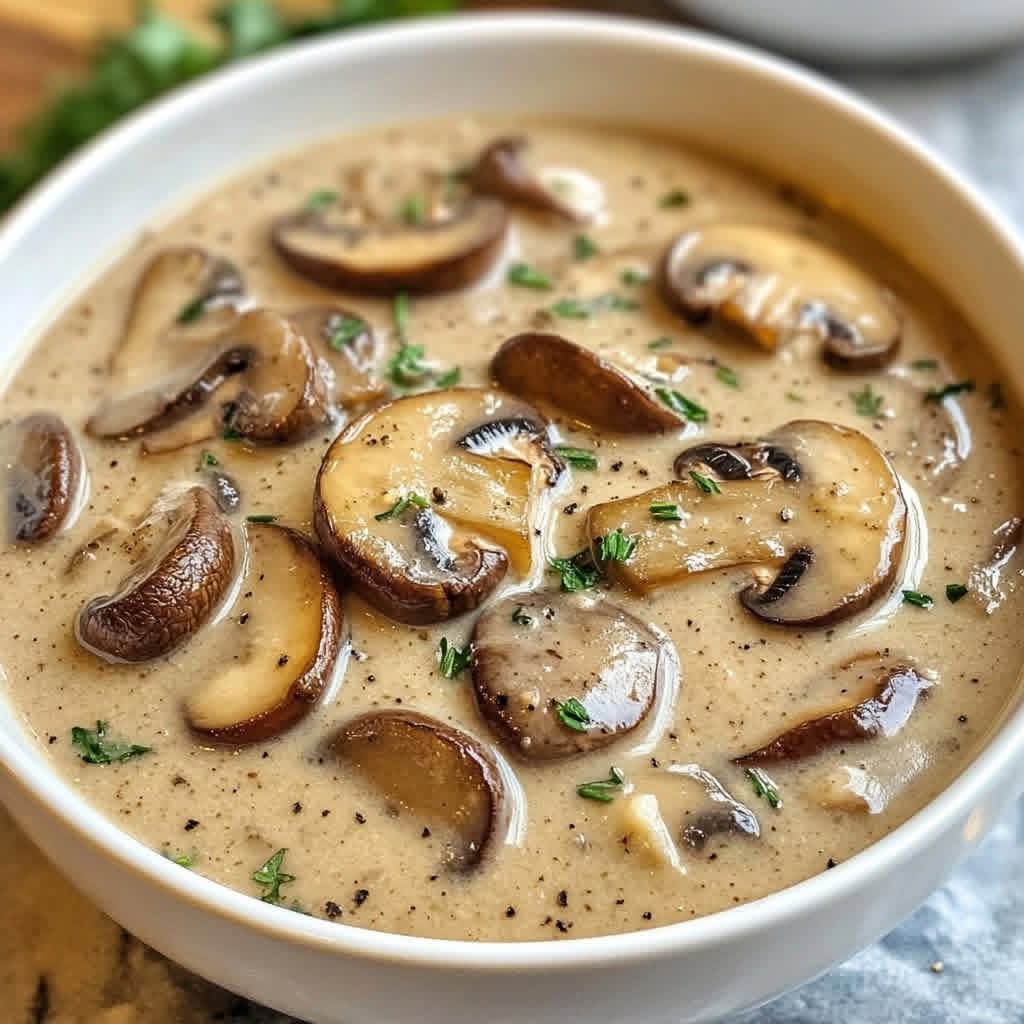
The primary flaw of standard canned mushroom soup is its monochromatic, highly processed flavor profile, which often leans heavily on salt and starch rather than the natural characteristics of the star ingredient. Homemade cream of mushroom soup, on the other hand, relies on building layers of complex flavor through caramelization, deglazing, and the slow simmering of aromatic herbs. By searing fresh mushrooms correctly, you unlock their inherent umami potential, creating a broth that tastes incredibly rich, earthy, and deeply dimensional. As showcased in the stunning presentation in 1000006302.jpg, a homemade bowl offers a beautiful visual contrast between a silky, cream-infused base and thick, tender slices of perfectly browned mushrooms. Every spoonful delivers a balance of savory meatiness, a delicate herbal undercurrent, and a luxurious mouthfeel that coats the palate without feeling overly heavy or gummy.
Selecting and Preparing Your Mushroom Varieties
The foundation of a spectacular mushroom soup is, naturally, the choice of mushrooms. Exploring different varieties allows you to customize the depth and intensity of the earthiness in your final dish.
The Versatility of Cremini and White Button Mushrooms
For an accessible, well-balanced everyday soup, a combination of standard white button mushrooms and cremini mushrooms is an excellent choice. White button mushrooms offer a very mild, delicate flavor and a clean color that keeps the soup looking light and appetizing. Cremini mushrooms, often marketed as baby bellas, are simply a more mature variation of the white button variety. They possess a firmer texture, lower moisture content, and a significantly deeper, woodier flavor profile. Utilizing a mix of these two readily available varieties ensures that your soup has a robust mushroom flavor without requiring a trip to a specialty market.
Elevating with Wild and Gourmet Fungi
If you want to transition your soup into a truly decadent, gourmet experience, consider introducing wild or cultivated exotic mushrooms into the pot. Shiitake mushrooms contribute an intense, smoky umami note, while oyster mushrooms add a delicate, velvety texture and a subtle hint of seafood-like sweetness. Chanterelles or porcini mushrooms—whether fresh or reconstituted from a dried state—will infuse the broth with a profoundly earthy, luxurious aroma that mimics high-end bistro fare. If you use dried mushrooms, never discard their soaking liquid; straining this dark, concentrated fluid and adding it directly to your soup base adds an incredible explosion of pure mushroom essence.
Proper Cleaning and Slicing Techniques
Mushrooms act like tiny sponges, meaning they absorb water rapidly if handled incorrectly. Avoid submerging your fresh mushrooms in a bowl of water to wash them, as this will waterlog the tissue, preventing them from browning beautifully in your pan. Instead, use a damp paper towel or a soft kitchen brush to gently wipe away any loose peat moss or dirt from the caps and stems. When slicing, aim for a substantial thickness—roughly a quarter-inch per slice—as illustrated by the beautiful, plump mushroom pieces visible floating in 1000006302.jpg. Slicing them too thin will cause them to shrivel up and disappear into the broth, depriving your guests of that wonderful, tender chew.
Step-by-Step Guide to the Perfect Mushroom Soup
Building a cohesive, velvet-smooth cream soup requires a systematic approach to cooking your aromatics, searing your mushrooms, and properly emulsifying your liquids. Following these steps guarantees a flawless result free of flour clumps or separated fats.
Step 1: Sauté Aromatics and Sear the Mushrooms
Melt three tablespoons of unsalted butter alongside one tablespoon of olive oil in a large, heavy-bottomed Dutch oven or stockpot over medium-high heat. Add one finely diced yellow onion and three minced cloves of garlic, cooking for 3 to 4 minutes until they become translucent and fragrant. Next, crank the heat up slightly and add one and a half pounds of your prepared sliced mushrooms to the pot. It is crucial not to crowd the pan; if your pot is small, sear the mushrooms in batches. Allow them to sit undisturbed for the first few minutes to develop a deep, golden-brown crust. As the mushrooms release their natural juices and shrink, stir them occasionally until all the liquid evaporates and a rich, caramelized fond forms on the bottom of the pot.
Step 2: Build the Thickening Base (The Roux)
Once your mushrooms are beautifully browned and tender, sprinkle three tablespoons of all-purpose flour uniformly over the contents of the pot. Stir the mixture continuously for about two minutes. This process, known as making a roux, coats the caramelized mushrooms and onions in the fat and flour. Cooking the flour for a full two minutes is essential to eliminate the raw, chalky taste of grain, allowing the starches to toast slightly and develop a subtle, nutty aroma that enhances the soup’s final flavor profile.
Step 3: Deglaze and Simmer with Broth
To unlock all the incredibly flavorful browned bits stuck to the bottom of your Dutch oven, pour in half a cup of dry white wine—such as a Sauvignon Blanc or Pinot Grigio—stirring vigorously with a wooden spoon to scrape the pan completely clean. If you prefer to cook without alcohol, you can easily substitute a splash of fresh lemon juice mixed with broth. Once the wine has mostly reduced, slowly pour in four cups of high-quality beef or vegetable stock, whisking constantly to ensure the flour dissolves smoothly into the liquid without forming lumps. Add two sprigs of fresh thyme, one bay leaf, a teaspoon of sea salt, and a generous crack of black pepper. Bring the liquid to a boil, then reduce the heat to low, cover with a lid, and let it simmer gently for 15 to 20 minutes to allow the flavors to meld.
Step 4: Finish with Cream and Assemble
Remove the pot from the heat and discard the woody thyme stems and bay leaf. If you prefer a completely smooth, pureed style of soup, you can use an immersion blender at this stage to process the mixture to your desired consistency. However, for a rustic, satisfying texture that honors the ingredients, leave the soup unblended to showcase the beautiful mushroom contours seen in 1000006302.jpg. Slowly stir in one cup of heavy cream or half-and-half, allowing the residual heat of the broth to warm the dairy gently without boiling, which prevents curdling. Taste the soup carefully, adjusting the salt and pepper to your preference, and ladle it into warm serving bowls.
Customizations and Flavor Variations
This versatile base serves as an excellent canvas for various culinary adaptations, allowing you to tailor the soup to match different dietary preferences or regional styles.
- The Hungarian Mushroom Twist: Infuse your soup with a vibrant Eastern European flair by stirring in two teaspoons of sweet Hungarian paprika and a splash of soy sauce during the simmering process. Finish the soup with a generous dollop of sour cream instead of heavy cream, and garnish with fresh dill for a tangy, smoky, and incredibly comforting flavor profile.
- The Roasted Garlic and Herb Infusion: Prior to making your soup, roast a whole head of garlic in the oven until the cloves are buttery and sweet. Squeeze the soft, roasted garlic paste directly into your pan along with the fresh mushrooms. Supplement the fresh thyme with minced rosemary and sage to create a deeply aromatic, woodland-inspired herbal broth.
- A Luxurious Creamy Truffle Upgrade: For a truly decadent centerpiece appetizer fit for a formal dinner party, prepare the base recipe using a mix of wild porcini and shiitake mushrooms. Just before ladling the soup into bowls, swirl in a teaspoon of high-quality white truffle oil and top each serving with freshly shaved Parmesan cheese and a shower of microgreens.
- A Rich Plant-Based Alternative: To create a spectacular dairy-free and vegan version of this comfort classic, substitute the butter with unrefined coconut oil or vegan butter alternative. Replace the all-purpose flour with a gluten-free flour blend or use a cornstarch slurry later in the process. For the final creamy finish, stir in full-fat canned coconut milk or a rich cashew cream, which provides an equally luxurious texture without altering the savory mushroom profile.
Expert Tips for Serving and Garnishing
To match the flawless visual presentation captured in 1000006302.jpg, paying attention to your final presentation touches and structural accompaniments can turn a simple lunch into a memorable event.
Mastering the Art of the Garnish
A rich, earthy brown soup benefits immensely from a pop of bright color and fresh flavor right before it hits the table. Finely chopped fresh flat-leaf parsley, chives, or micro-herbs add a beautiful contrast to the creamy base, breaking up the visual monotony of the dish. For an extra touch of texture, reserve a handful of beautifully sliced mushroom caps during the initial searing step. Sauté these reserved slices separately in a touch of butter until they are crisp around the edges, and float them gently on top of each bowl along with a final, coarse crack of black pepper and a tiny drizzle of extra virgin olive oil.
Finding the Perfect Bread Accompaniments
A velvet-smooth cream soup practically demands a high-quality carbohydrate partner to wipe the bowl clean. A thick slice of crusty artisan sourdough bread, heavily toasted and smeared with salted butter, offers the perfect chewy, tangy contrast to the rich cream base. Alternatively, serving your homemade soup alongside warm garlic herb croutons, crispy puff pastry twists, or a classic grilled cheese sandwich packed with sharp white cheddar or Gruyère cheese creates a nostalgic, deeply satisfying meal combination that everyone will adore.
Reheating and Storing Leftovers Safely
Because this soup contains a significant amount of dairy, storing and reheating it requires a bit of care to maintain that beautiful, cohesive texture. Allow your leftover soup to cool to room temperature before transferring it to airtight glass containers, where it will keep beautifully in the refrigerator for up to four days. When you are ready to enjoy it again, pour the soup into a small saucepan and heat it gently over medium-low heat, stirring frequently. Avoid letting the soup reach a rolling boil, as intense heat can cause the proteins in the heavy cream to separate from the broth, resulting in a grainy appearance rather than the flawless, smooth consistency you worked so hard to create.
Conclusion: The Joy of Crafting Comfort from Scratch
Ultimately, investing a small amount of time into creating a homemade cream of mushroom soup pays massive dividends in both flavor and culinary satisfaction. By rejecting the convenience of the tin can and embracing fresh, wholesome ingredients, you unlock the true culinary potential of the humble mushroom. The process of caramelizing the fungi, cooking a traditional roux, and finishing the broth with a velvety touch of cream is a joyful, therapeutic kitchen ritual that rewards you with an incredibly rich, comforting bowl of soup. Whether you serve it as an elegant first course for a weekend dinner party or enjoy it as a cozy, low-stress weeknight lunch alongside a loaf of crusty bread, this recipe is guaranteed to become a treasured staple in your home cooking repertoire. Let your slow cooker take a break, gather your favorite fresh mushrooms, and enjoy the unmatched comfort of a scratch-made winter classic.