The Botanical Evolution of the Common Dandelion
The common dandelion (Taraxacum officinale) is a remarkably resilient, herbaceous perennial plant that has thrived for centuries across temperate zones worldwide. Though frequently classified as an aggressive garden weed by modern standards, this botanical specimen possesses a deeply anchored taproot system and a rosette of deeply lobed leaves that mimic a tooth-like pattern. Historically, traditional agrarian communities viewed the plant quite differently, recognizing it as a highly valuable seasonal marker and a vital component of local ecosystems. Dandelions are dynamic accumulators; their powerful, deep-reaching root systems penetrate thick, compacted soils to pull up essential minerals and nutrients from the subsoil layers, enriching the immediate topsoil profile as their foliage naturally decomposes. This evolutionary adaptation allows the plant to survive in highly disturbed environments, transforming poor, neglected ground into a fertile habitat for a diverse array of wild microorganisms and beneficial insects.
Dandelions in Ancient Horticultural Folklore and Custom
Long before the advent of industrial agriculture and chemical land management, rural folklore celebrated the early spring arrival of the dandelion’s bright yellow blossom. Across various European and East Asian traditions, the plant was woven into seasonal folklore as a symbol of solar energy, resilience, and seasonal transition. Early agriculturalists observed that the opening and closing of the golden petals correlated closely with daily solar cycles, utilizing the blossoms as a natural timepiece and weather predictor. Gathering wild dandelions was a communal spring ritual, signifying the renewal of the earth after a long, sparse winter. Every single part of the plant—from the sunny yellow flower head down to the dense, fibrous taproot—was carefully harvested and utilized in cultural ceremonies, traditional household crafts, and seasonal festivals, highlighting a profound historical connection between human communities and the wild botanical world around them.
Scientific Insights into the Organic Compounds of Taraxacum Officinale
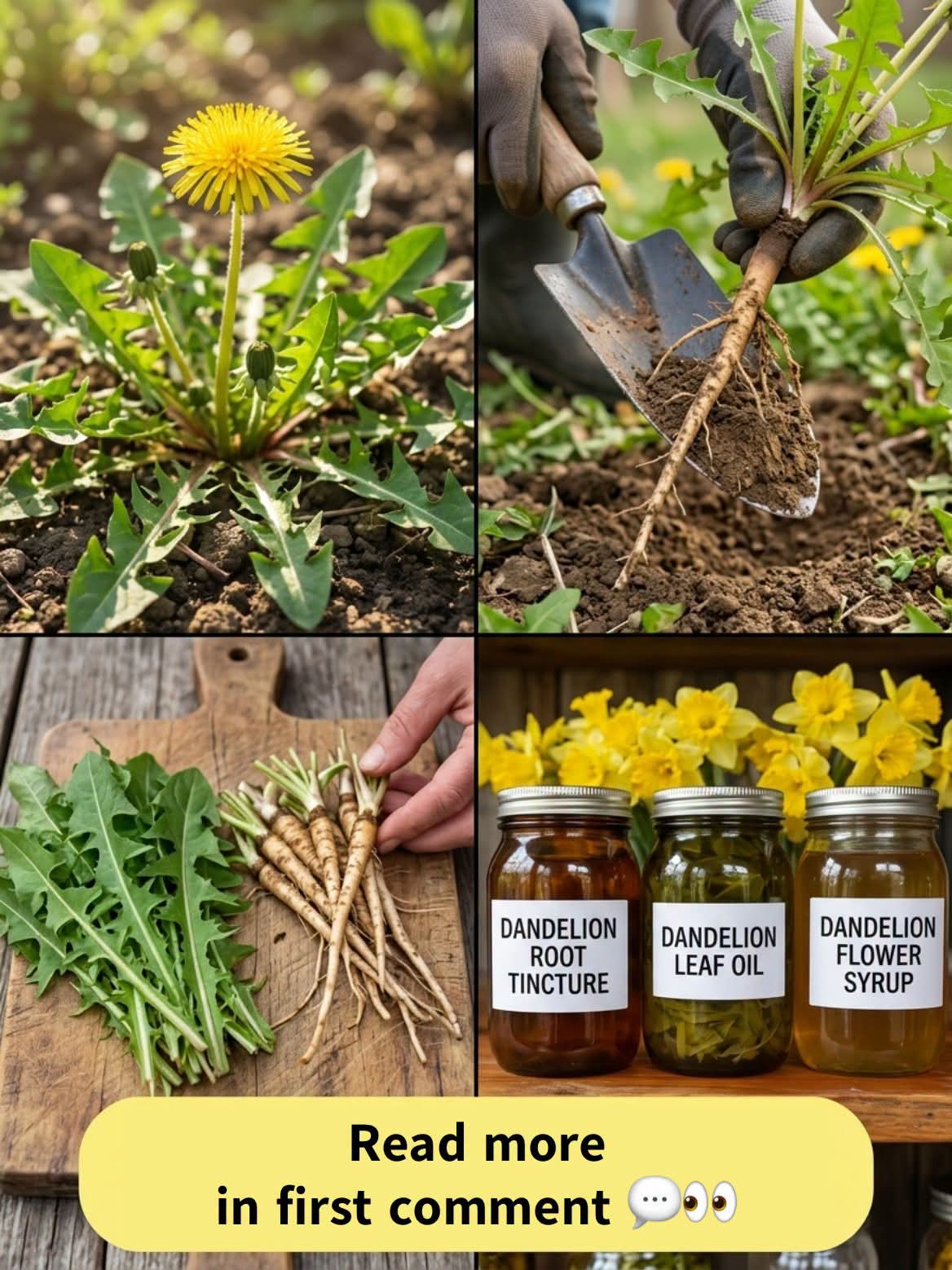
From a contemporary biochemical perspective, Taraxacum officinale is an intricate warehouse of complex organic compounds distributed throughout its anatomical structures. As visually demonstrated in the distinct preparation jars within 1000006021.jpg, different sections of the plant yield entirely unique chemical profiles. The thick, pale taproot is exceptionally rich in inulin—a naturally occurring prebiotic soluble fiber—alongside sesquiterpene lactones, taraxasterol, and phenolic acids. The serrated green leaves boast a dense concentration of flavonoids (such as luteolin), coumarins, and high structural levels of potassium and vitamin C. Meanwhile, the bright yellow petals contain rich amounts of carotenoids, including lutein, which protect the plant tissues from intense ultraviolet radiation. When these individual components are isolated through specialized extractions, they release these complex organic elements into the fluid mediums, creating stable botanical solutions valued for their educational and historical significance.
Technical Guide to Foraging and Practical Processing
Successfully harvesting and preparing dandelion components requires careful timing, precise tools, and proper physical processing methods. Each stage of the collection process transforms raw, wild plant material into a clean, stable state suitable for historical extractions or everyday domestic crafts. The progressive panels in 1000006021.jpg highlight these essential stages, illustrating the living plant in its natural environment, the manual excavation of the taproot with a hand trowel, the meticulous sorting of washed roots and leaves on a wooden block, and the final labeled botanical storage vessels.
Foraging Protocols and Tool Specifications
When gathering wild dandelions, using the correct physical equipment ensures clean collection while preserving the surrounding soil structure. To extract the elongated taproot completely without snapping it mid-way, a specialized weeding tool or a narrow garden trowel is required, as shown in the top-right panel of 1000006021.jpg. Heavy-duty canvas or leather gardening gloves should be worn to protect hands from soil-borne debris and the sticky, white latex sap that naturally exudes from cut stems. Focus your foraging efforts on areas away from busy roadways, industrial perimeters, or modern manicured lawns that may have been subjected to chemical herbicide spraying or urban contamination. The ideal harvesting window for roots is late autumn or early spring when the plant’s carbohydrate reserves are concentrated below ground, whereas leaves and blossoms should be gathered in mid-spring when they are at their peak structural vitality.
Meticulous Cleaning and Filtration Methods
Once harvested, the raw plant material must undergo a rigorous cleaning protocol to eliminate all stubborn soil particulates, macroorganisms, and natural surface residues.
- Initial Dry Shaking: Gently shake the excavated roots over the harvest site to dislodge heavy soil clumps, preserving the local topsoil layer.
- Cold Water Immersion: Submerge the collected roots, leaves, and flowers in separate baths of clean, cold water. Use a soft-bristled vegetable brush to scrub the crevices of the taproots thoroughly until the outer skin is completely free of dirt.
- Secondary Fine Rinsing: Rinse the green leaves and delicate flower heads under a gentle stream of running water to remove any hidden garden insects or wind-blown dust.
- Thorough Dehydration: Spread the washed botanical elements out in a single layer across clean, lint-free cotton towels or elevated mesh drying racks. Allow them to air-dry completely out of direct sunlight; any remaining surface moisture during processing can introduce unwanted mold spores, compromising the stability of the final extract.
Mechanical Slicing and Preservation Prep
Following a thorough drying phase, the botanical components are moved to a stable cutting board for mechanical sizing, as beautifully depicted in the lower-left panel of 1000006021.jpg. Using a sanitized, sharp chef’s knife, slice the long taproots into uniform, quarter-inch rounds. Slicing increases the total surface area, allowing for an even release of internal compounds during subsequent drying or steeping phases. Cut the vibrant green leaves into manageable one-inch segments, keeping them separate from the dense roots. If you are preparing the yellow flowers for traditional syrups, carefully pinch the green bracts at the base of the flower head to isolate the yellow petals, as the green components contain a high amount of bitter latex sap that can alter the flavor profile of traditional domestic preserves.
Structural Breakdown of Traditional Botanical Extractions
The lower-right panel of 1000006021.jpg illustrates three primary methodologies used to preserve and utilize different parts of the dandelion plant. These liquid storage systems represent classic preservation techniques designed to isolate specific plant properties within distinct liquid carriers.
Dandelion Root Tincture Preparation
A traditional dandelion root tincture relies on a long-term liquid extraction process designed to capture the alcohol-soluble compounds found deep within the taproot. Cleaned, sliced root rounds are packed tightly into a dark amber glass jar to protect the mixture from UV light degradation. The container is then filled to the brim with a high-proof, food-grade spirit (typically an unflavored 80 to 100-proof vodka), ensuring the plant material is completely submerged. The sealed jar is stored in a cool, dark cupboard for four to six weeks and shaken daily. Over time, the clear liquid transforms into a deep, opaque brown solution, capturing the dense, earthy compounds of the root matrix.
Dandelion Leaf Oil Infusion
The leaf oil infusion isolates the lipid-soluble compounds and pigments found within the serrated green foliage. Dried dandelion leaf segments are placed into a clean glass jar and covered completely with a stable, high-quality carrier oil, such as extra virgin olive oil or cold-pressed sunflower oil. It is crucial that the leaves are entirely dehydrated before immersion, as any water content will cause the oil mixture to go rancid. The jar is sealed and left to steep in a warm, shaded location for three to four weeks. The resulting oil takes on a lovely, muted green hue and a faint, grassy aroma, making it an exceptional base for traditional domestic salves, homemade balms, or moisturizing skin crafts.
Dandelion Flower Syrup Mechanics
The creation of dandelion flower syrup represents a historic culinary preservation method designed to trap the delicate, honey-like aromatics of the spring blossoms within a thick carbohydrate matrix. Freshly plucked yellow petals are briefly steeped in boiling water to create a vibrant, golden botanical tea. After straining out the spent petals through a fine mesh filter, equal parts of organic cane sugar are dissolved into the warm liquid. The mixture is gently simmered until it reduces into a viscous, amber-yellow syrup, matching the appearance shown in the final glass jar of 1000006021.jpg. This syrup serves as a traditional, plant-based alternative to honey in rural baking recipes and historical beverage formulations.
Domestic Applications and Healthy Lifestyle Integration
Integrating dandelion-based preparations into a mindful, self-sufficient lifestyle requires an understanding of how these traditional crafts interact with household routines. From culinary exploration to sustainable garden management, the dandelion offers an abundance of practical utility for the modern home.
Practical Culinary Uses for the Home Kitchen
Beyond traditional syrups, every component of the dandelion can find a unique purpose within a whole-food kitchen. The young, tender green leaves gathered in early spring offer a bold, peppery profile similar to chicory or arugula, making them an excellent addition to fresh garden salads or briefly sautéed alongside fresh garlic and olive oil. The robust, dried taproots can be slowly roasted in a low oven until they take on a deep chocolate-brown coloration and a fragrant, nutty aroma. When ground in a standard coffee mill, these roasted roots can be brewed in hot water to create a rich, caffeine-free beverage that mirrors the deep profile of traditional coffee, serving as a celebrated morning alternative in traditional households.
Sustainable Applications for the Home Garden
For dedicated gardeners, the dandelion is an exceptional asset for building soil health and creating natural plant washes. Because the leaves are rich in potassium, calcium, and essential trace minerals, adding pulled dandelions directly into an active compost pile provides a fantastic boost of organic matter that feeds beneficial earthworms and decomposer microbes. Alternatively, fresh dandelion leaves can be steeped in rain buckets for a few days to create a mild, nutrient-dense botanical drench. When strained and diluted with water, this liquid wash can be applied directly to the root zones of heavy-feeding garden crops, returning the deep-earth minerals captured by the dandelion taproots back into the active topsoil of your vegetable beds.
Comprehensive Safety Protocols and Publishing Disclaimers
When creating public content centered around wild foraging, botanical crafts, and traditional lifestyle preparations, establishing strict safety boundaries and clear legal frameworks is essential. This ensures the physical safety of readers and maintains the professional compliance of the digital publishing platform.
Critical Environmental and Foraging Hazards
Foragers must always exercise extreme caution regarding the environmental context of their harvest sites. Sticking strictly to clean, verified locations is paramount, as dandelions readily absorb environmental heavy metals, toxic chemical runoffs, and pesticide residues from surrounding soils and nearby water drainage paths. Never harvest plants showing signs of powdery mildew, leaf spot, or unusual discoloration. Additionally, ensure raw botanical extractions, alcohol-based tinctures, and concentrated oils are kept securely out of reach of small children and domestic pets to prevent accidental ingestion or misuse.
Absolute Adherence to Non-Medical and Educational Policies
This comprehensive guide is prepared exclusively for educational, historical, cultural folklore, and healthy lifestyle context. In strict compliance with digital advertising standards and corporate publishing policies, this text contains absolutely no medical, curative, or diagnostic claims. Dandelion preparations, tinctures, oils, and syrups described herein are intended solely for traditional domestic craft, culinary exploration, and educational appreciation. These materials are not formulated, evaluated, or intended to treat, cure, diagnose, or prevent any human health condition, and must never be utilized as a substitute for professional medical advice, prescription, or clinical care from a qualified healthcare practitioner.
Website Liability Limitation Clause
The authors, owners, and publishers of this website assume no responsibility or legal liability for any personal injury, allergic skin reactions, topical irritation, crop outcomes, or adverse domestic experiences resulting from the practical application of the foraging techniques, tool uses, cleaning methods, or extraction steps detailed in this article. Undertaking these traditional botanical preparations is done entirely at the user’s independent discretion and sole risk. Individuals are strongly advised to perform small-scale material tests and consult with local botanical experts before incorporating wild-foraged elements into their regular home routines.