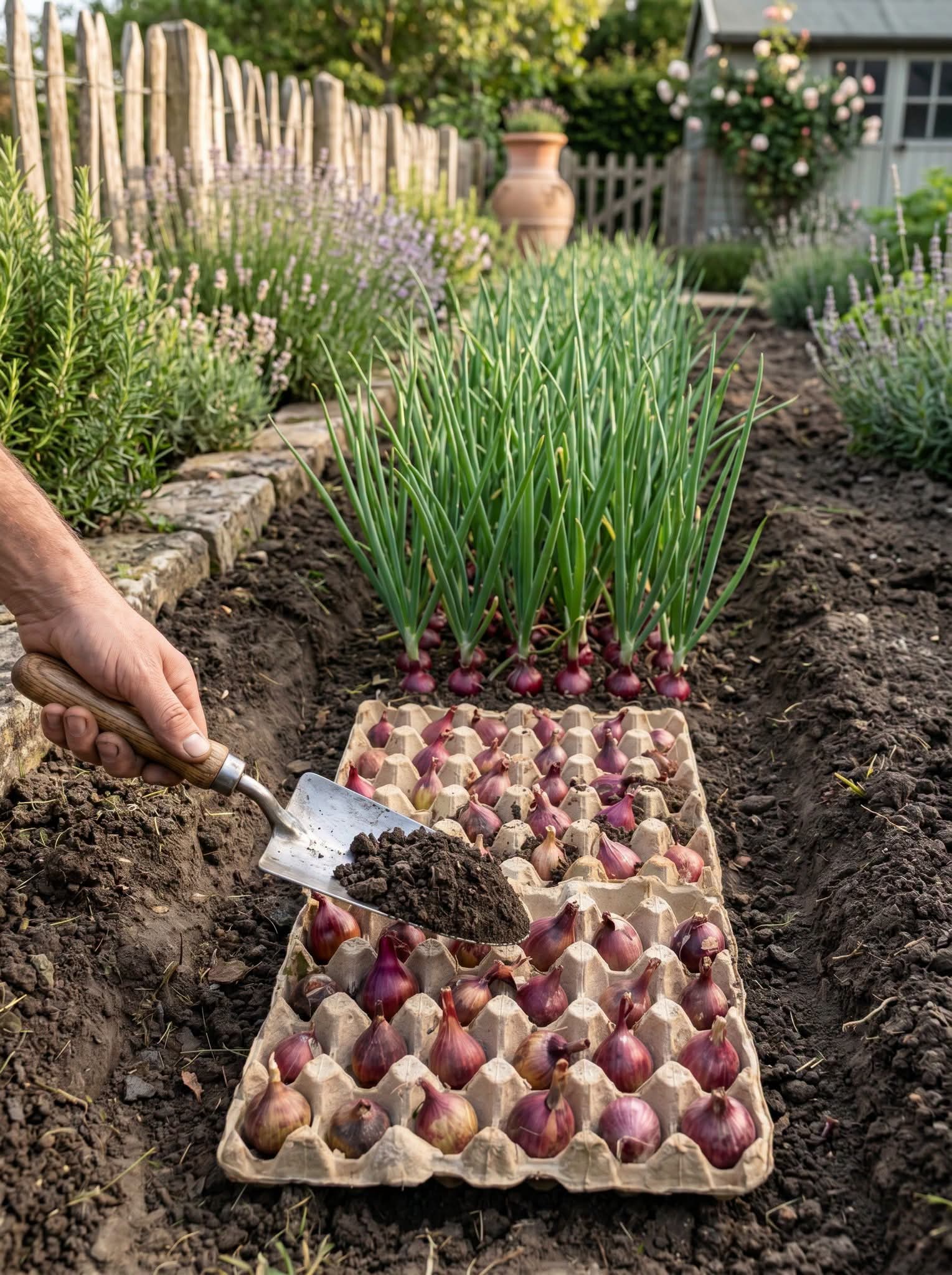
Planting Onions with Egg Carton Trays The Simple Grid Method
Introduction
Growing onions at home is one of the most rewarding gardening projects for beginners and experienced gardeners alike. Onions are versatile, easy to grow, and can be used in countless recipes throughout the year. While there are many ways to plant onions, one simple technique has gained popularity among home gardeners: planting onions with egg carton trays.
This clever gardening method uses recycled cardboard egg cartons as a planting guide, helping gardeners achieve perfect spacing without measuring or guessing. The result is a neat, organized garden bed that promotes healthy onion growth while making planting faster and easier.
If you’ve ever struggled with uneven spacing, crowded onion bulbs, or wasted garden space, the egg carton tray method may be exactly what you need. This guide will explain everything you need to know about planting onions using egg cartons, including benefits, preparation, planting techniques, maintenance tips, and harvesting advice.
What Is the Egg Carton Onion Planting Method?
The egg carton method is a simple gardening technique that uses cardboard egg trays as a natural planting grid. Each compartment serves as a spacing guide for individual onion sets or seedlings.
Instead of measuring distances manually, gardeners place the egg carton directly onto prepared soil and use each cup as a marker. This creates evenly spaced onions that have enough room to develop healthy bulbs without competing for nutrients.
The method is inexpensive, environmentally friendly, and ideal for raised beds, traditional gardens, and small backyard plots.
Why Use Egg Cartons for Planting Onions?
Perfect Spacing Every Time
Proper spacing is essential for onion growth. Crowded onions often produce smaller bulbs. Egg cartons automatically create consistent spacing between plants.
Recycles Household Materials
Rather than throwing away cardboard egg cartons, gardeners can give them a second life in the garden.
Saves Time
There is no need to measure planting distances individually. The tray serves as a ready-made template.
Reduces Gardening Mistakes
Even beginner gardeners can achieve professional-looking rows with minimal effort.
Encourages Healthier Bulbs
Proper airflow and spacing reduce disease risks and encourage larger onion development.
Benefits of Growing Your Own Onions
Homegrown onions offer many advantages compared to store-bought varieties.
Fresh Flavor
Freshly harvested onions often have a sweeter and more robust flavor.
Cost Savings
A small investment in onion sets can provide a large harvest.
Organic Growing Options
You control fertilizers, pesticides, and growing conditions.
Long Storage Life
Many onion varieties can be stored for months after harvest.
Year-Round Kitchen Use
Onions are among the most frequently used vegetables in cooking.
Choosing the Right Onion Variety
Before planting, choose a variety suited to your climate and gardening goals.
Red Onions
Red onions offer a mild flavor and attractive color. They are excellent for salads and fresh dishes.
Yellow Onions
The most versatile option for cooking, roasting, and soups.
White Onions
Known for their crisp texture and mild taste.
Sweet Onions
Popular for sandwiches, grilling, and caramelizing.
Materials Needed
To use the egg carton planting method, gather the following:
- Cardboard egg cartons
- Onion sets or onion seedlings
- Garden soil
- Compost
- Hand trowel
- Watering can or hose
- Garden gloves
- Mulch
Using quality materials helps ensure a successful growing season.
Preparing the Garden Bed
Select a Sunny Location
Onions require at least six to eight hours of sunlight daily.
Improve Soil Quality
Mix compost into the soil to improve fertility and drainage.
Remove Weeds
Clear the area of weeds and debris before planting.
Loosen the Soil
Work the soil to a depth of several inches to encourage root development.
How to Plant Onions Using Egg Carton Trays
Step 1: Prepare the Soil
Create a smooth, level planting area.
Step 2: Position the Egg Carton
Place the cardboard egg carton directly on the soil surface.
Press gently so the cups leave visible impressions.
Step 3: Mark the Holes
Use the impressions as planting locations.
You can remove the tray after marking or leave biodegradable cardboard pieces in the soil.
Step 4: Plant the Onion Sets
Place one onion set in each marked location.
Position the pointed end upward.
Step 5: Cover Lightly with Soil
Cover the onion sets with a thin layer of soil.
Avoid planting too deeply.
Step 6: Water Thoroughly
Give the newly planted onions a gentle watering.
Moist soil helps roots establish quickly.
Best Time to Plant Onions
Spring Planting
Most gardeners plant onions in early spring once the soil can be worked.
Fall Planting
In mild climates, onions can be planted in autumn for an earlier harvest the following year.
Climate Considerations
Always consider local growing conditions and frost dates.
Watering Tips
Keep Soil Consistently Moist
Onions prefer evenly moist soil but do not like standing water.
Water Deeply
Deep watering encourages stronger root systems.
Reduce Water Before Harvest
Less water near harvest time helps bulbs mature properly.
Fertilizing Onions
Start with Compost
Compost provides a strong nutritional foundation.
Use Balanced Fertilizer
Apply according to product instructions.
Avoid Excess Nitrogen
Too much nitrogen can produce excessive leaf growth at the expense of bulb development.
Common Onion Growing Problems
Small Bulbs
Often caused by overcrowding or insufficient sunlight.
Yellow Leaves
May indicate nutrient deficiencies or watering issues.
Rotting Bulbs
Usually caused by poor drainage or overwatering.
Weed Competition
Weeds can reduce bulb size by competing for nutrients.
Advantages of Proper Onion Spacing
The egg carton method shines when it comes to spacing.
Proper spacing:
- Improves airflow
- Reduces disease pressure
- Encourages larger bulbs
- Simplifies harvesting
- Maximizes garden efficiency
Harvesting Your Onions
Watch the Tops
Onions are usually ready when the green tops begin to fall over naturally.
Loosen the Soil
Use a garden fork or trowel carefully around the bulbs.
Lift and Dry
Remove onions and allow them to cure in a dry, well-ventilated location.
Store Properly
Store cured onions in a cool, dry place.
Storage Tips
Properly cured onions can last for several months.
Store them:
- In mesh bags
- In baskets
- In cool pantries
- Away from moisture
Avoid storing onions in sealed plastic containers.
Frequently Asked Questions
Can I Leave the Egg Carton in the Soil?
Yes. Cardboard egg cartons are biodegradable and will break down naturally over time.
How Far Apart Should Onions Be?
Most onions perform well with 4 to 6 inches of spacing, which the egg carton method helps achieve consistently.
Can I Use Plastic Egg Cartons?
Cardboard cartons are preferred because they are biodegradable.
Do Onions Need Full Sun?
Yes. Onions grow best with plenty of sunlight.
How Long Do Onions Take to Grow?
Most onion varieties require 90 to 120 days from planting to harvest.
Why Gardeners Love the Simple Grid Method
The egg carton grid method combines simplicity, sustainability, and efficiency. It eliminates guesswork while creating organized rows that support healthy onion growth. Whether you’re planting a small backyard garden or a larger vegetable patch, this method saves time and helps produce a better harvest.
Many gardeners appreciate that it recycles household materials while improving planting accuracy. It’s an excellent example of how simple solutions can make gardening easier and more productive.
Conclusion
Planting onions with egg carton trays is one of the easiest and most effective ways to achieve perfect spacing in the garden. This simple grid method helps gardeners grow healthier onions, maximize garden space, and reduce planting errors. By reusing cardboard egg cartons, you can create an organized planting system that supports strong bulb development throughout the growing season.
Whether you’re a beginner planting your first vegetable garden or an experienced gardener looking for a practical technique, the egg carton method is worth trying. With proper care, watering, and sunlight, you’ll enjoy a successful onion harvest and discover why this clever gardening hack has become a favorite among home growers.